Tired of Fumbling for Keys While Juggling Groceries? This Changed Everything for Our Family
Ever stood outside your front door, arms full of bags, only to realize the keys are buried at the bottom—or worse, left inside? We’ve all been there. That moment of frustration used to kick off too many evenings. But not anymore. What changed wasn’t just convenience—it was peace of mind, smoother routines, and a little more joy in the everyday. Let me tell you how one small tech upgrade quietly transformed the way our family moves through home life.
The Daily Struggle: When Simple Tasks Feel Impossible
Picture this: It’s 5:45 PM. The kids are buzzing from the back seat after a long day at school and soccer practice. You’ve got three grocery bags stacked in your arms, a diaper bag slung over one shoulder, and your phone is already ringing—probably your partner checking if dinner will be late. You reach the front door, shift a bag to your hip, dig through your purse, and… nothing. No keys. You dig deeper. Maybe they’re in the side pocket? No. Wait—didn’t you just use them at the mailbox? Panic starts to rise. You set the bags down carefully, trying not to spill the milk, and start emptying your purse onto the porch. Meanwhile, the kids are asking, “Can I go in? Why can’t we get in?” And then—oh no—the back door was locked too. You’re stranded. Again.
This wasn’t a once-in-a-blue-moon thing. For us, it happened at least once a week. Sometimes the keys were in the car. Sometimes they were in the house because someone forgot to lock the door from the inside. Sometimes they were in the hands of a teenager who took the last Uber home and couldn’t get in. Each time, it wasn’t just inconvenient—it was emotionally draining. That helpless feeling, the rising stress, the snapping at the kids when they asked the same question for the fifth time… it stole the calm from our evenings. And the worst part? It wasn’t even a big emergency. Just a tiny crack in the rhythm of our day that somehow made everything feel broken.
We started looking for patterns. Was it just bad luck? Or was it the fact that our lives were so full, so layered with responsibilities, that small things like keys became landmines? Between school drop-offs, work deadlines, doctor appointments, and laundry that never seemed to end, we were constantly multitasking. And multitasking meant forgetting. We needed a system that didn’t rely on memory or perfect timing. We needed something that worked even when we were tired, distracted, or running late. That’s when we realized: maybe the problem wasn’t us. Maybe it was the lock.
Discovering a Smarter Way: Our First Encounter with Smart Access
I remember the exact moment everything shifted. My friend Lisa invited us over for dinner. We pulled up, and as I reached into my bag for my keys—old habit—I watched her walk up to her front door with a coffee in one hand and her toddler on her hip. She didn’t stop. Didn’t dig. Didn’t fumble. She just touched the keypad, entered a code, and the door clicked open. That was it. I stood there, stunned. “Wait… you don’t use keys?” I asked. She laughed. “Not in years. I have the app, the code, and a little key fob for my purse. Honestly, I don’t even miss them.”
It sounded too good to be true. I’ll admit, I was skeptical. I pictured complicated wiring, glitchy software, or some expensive gadget that would break in six months. But Lisa showed me how she checked the lock from her phone while we were at the park. She sent a temporary code to her sister when she came to feed the dog. She even showed me the log of who came in and when—perfect for tracking the babysitter’s arrival. It wasn’t about showing off tech. It was about control, safety, and simplicity.
What struck me most was how natural it felt. There was no drama, no learning curve, no stress. It just… worked. And the look on her face—calm, confident, unbothered—was something I wanted for my own home. That night, I went home and Googled “keyless front door lock” for the first time. Not because I wanted to be high-tech, but because I wanted to feel like Lisa—like someone who wasn’t ruled by small frustrations. I wanted to walk into my house without fear, without digging, without yelling, “Who has the keys?!”
Choosing What Fit Our Family’s Life—Not Just the Flashiest Tech
Once I started researching, I was overwhelmed. There were locks with built-in cameras, facial recognition, voice assistants, even ones that could tell you who was at the door through your TV. It was impressive, sure, but I wasn’t trying to live in a sci-fi movie. I needed something that worked for *our* family—real people with real lives. That meant it had to be easy for my 70-year-old mom to use when she came to water the plants. It had to be simple for my 13-year-old to unlock after practice. And it had to survive the chaos of a house with two dogs, one cat, and a toddler who opens every door he can reach.
So I made a list of what mattered most: reliability, ease of use, and security. Not the most features, not the coolest design—just something that wouldn’t fail us. I read reviews, watched setup videos, and asked questions in parenting groups. What I learned? Most families weren’t looking for a robot butler. They wanted peace of mind. They wanted to stop worrying about lost keys, locked-out kids, or hiding spares under mats where anyone could find them.
We ended up choosing a model that offered multiple access methods: a keypad code, a smartphone app, and physical key fobs for the kids and grandparents. No camera, no video—just a solid, dependable lock with a long battery life and strong encryption. The brand wasn’t the most famous, but it had consistent five-star reviews for being “just right.” It didn’t do everything, but it did what we needed, and it did it well. Making that choice wasn’t about tech specs—it was about care. It was about saying, “This house should protect us, not stress us.”
Installation Without the Headache: Easier Than We Expected
I’ll be honest—I almost backed out at the installation stage. The idea of drilling into our front door, messing with wiring, or breaking the lock mechanism scared me. I called my brother-in-law, ready to ask for help, and he said, “Just watch the video. Most of them are like IKEA furniture—you just follow the steps.” Skeptical but determined, I opened the box on a Saturday morning while the kids played outside.
The instructions were clear. The tools were basic—a screwdriver and a drill, both of which we already had. The whole process took about 40 minutes. We removed the old deadbolt, lined up the new one, connected the interior panel, and installed the app. The hardest part? Choosing the unlock sound. My son wanted a dinosaur roar. My daughter voted for a chime. We compromised on a soft beep—quiet but clear. And just like that, it was done.
What surprised me most was how user-friendly everything was. The app walked us through pairing the lock, setting up codes, and testing the battery. No tech degree required. No confusing menus. Even syncing the key fobs was as easy as holding them near the door. I realized then that this wasn’t technology for engineers. It was designed for people like me—busy parents who just want things to work. And the fact that my kids could help, that my husband could test it from his office downtown, made it feel like a family project, not a chore.
The Real Magic: How Life Got Smoother, Not Just Smarter
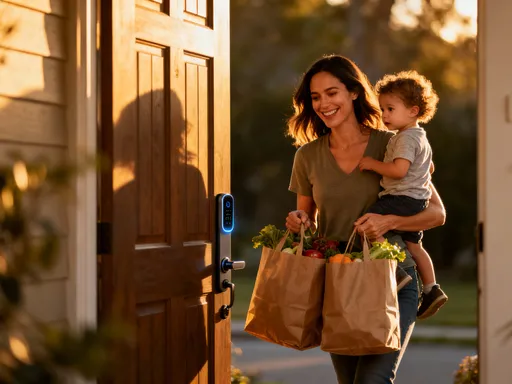
The real test came a week later. I was at the grocery store with all three kids, arms full again, but this time, I wasn’t worried. I walked up to the door, entered the code with one hand, and pushed it open. No digging. No panic. No yelling. The kids walked in, dropped their backpacks, and started arguing over snacks—normal chaos, but *inside* the house. That small victory felt huge.
But the real magic wasn’t just about groceries. It was about trust. Our teenager can come home from basketball practice at 7 PM, let herself in, and send a quick text that she’s safe. No more calls asking, “Can you come unlock the door?” No more waiting on the porch in the cold. My mom visits every Thursday to help with the garden, and now she has her own code—no more hiding keys under fake rocks that everyone knows about. Even our dog walker gets a temporary code during the week, so she doesn’t have to interrupt her route.
What’s beautiful is how invisible it’s become. We don’t talk about the lock anymore. It’s just part of the house, like the light switch or the thermostat. But the peace it brings? That’s very much alive. Mornings are calmer. Evenings are smoother. We’re not starting our time together with frustration. And honestly, that’s changed the mood of our whole home. It’s not just about access—it’s about returning to a place that feels welcoming, not stressful.
Sharing Access Without Sharing Stress
Before, giving someone access to our home felt like a big deal. We’d make a spare key, label it, and worry. What if they lost it? What if they forgot to return it? What if someone copied it? We once had a babysitter keep a key for six months after she stopped working for us. We were too awkward to ask for it back. And if we ever wanted to change the locks, it meant calling a locksmith, paying hundreds, and rekeying every door. It was a mess.
Now? Sharing access is as easy as sending a text. When our neighbor had surgery, we gave her daughter a temporary code so she could drop off meals without ringing the bell. When we had a plumber come, I created a one-day code and deleted it after he left. No physical keys. No risk. No awkward conversations. And if someone moves out or stops helping, I revoke their access with two taps on my phone. It’s over. Done. No stress, no loose ends.
This has been especially helpful for helping others. Last winter, we joined a neighborhood meal train for a family with a newborn. Instead of knocking and waking the baby, I sent a temporary code to the next person in line. They dropped off the casserole, snapped a photo of it on the counter, and left. Contactless, smooth, and kind. That small act of care was made possible by technology that supported generosity, not fear.
More Than Convenience: What We Gained Without Realizing
Looking back, I realize we didn’t just upgrade our front door. We upgraded our peace of mind. We gave ourselves the gift of small freedoms—the freedom to walk in without fear, the freedom to trust, the freedom to focus on what really matters when we walk through that door. It’s not about being high-tech. It’s about being human.
I used to think smart home tech was for people with too much time or money. But this experience taught me it’s really for people with too much to do. It’s for parents who are tired, for families who want to feel safe, for anyone who’s ever stood outside their home, bags in hand, heart sinking. That moment doesn’t have to be part of your story anymore.
What we gained wasn’t just convenience. We gained time. We gained calm. We gained the ability to start our evenings with a hug, not a hunt. And in a world that often feels too fast, too loud, too demanding, that’s everything. This little change didn’t make our house smarter. It made our lives softer. Kinder. More in sync with the people we love. And isn’t that what home is supposed to be?