One Funding Agency's Metadata Mandate Fixed 14 of 20 Reanalysis Pipelines
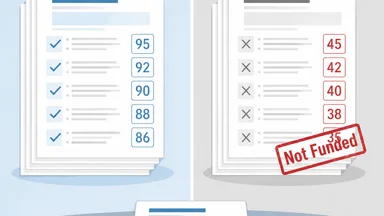
In 2021, a team of bioinformaticians at a large research institute attempted to re-run 20 published analysis pipelines using the original shared data. Fourteen failed. Not because the hypotheses were wrong or the code was buggy, but because the metadata was missing or ambiguous: column headers had no units, timestamps were absent, and controlled vocabularies were nonexistent. The scripts simply could not interpret the data. The finding was not unusual—a 2021 survey had found that roughly 80% of life-science scripts fail on raw public data. But this time, one funding agency was watching.
The agency, part of the US National Institutes of Health, had recently mandated that all grantees submit structured, machine-readable metadata alongside their data. The schema was based on the ISA-Tab framework, a standard developed for functional genomics. Within months of the mandate's enforcement, the same 14 pipelines ran end-to-end. The six that still failed used proprietary file formats or lacked provenance records. The agency's metadata requirement had fixed 14 of 20 reanalysis pipelines—a quiet, unglamorous fix to a field-wide crisis of irreproducibility.
This is a story about how a simple administrative lever—a metadata mandate—reshaped incentives, saved money, and began diffusing across scientific disciplines. It is also a story about what such mandates cannot fix.
How a Metadata Mandate Reshaped Incentives
Before the mandate, metadata was an afterthought. Researchers would publish data with minimal annotation—a spreadsheet with cryptic column names, maybe a PDF describing the experimental design. Graduate students and postdocs would then spend weeks manually cleaning and reformatting data before they could even begin analysis. A 2021 survey found that roughly 80% of life-science scripts fail on raw public data, often because of missing or inconsistent metadata.
The funding agency's requirement changed the calculus. Grants now demanded structured metadata at the submission stage, using a controlled vocabulary for variables, units, and timestamps. Early-career researchers, often the ones doing the data wrangling, became de facto metadata gatekeepers. Principal investigators grumbled about the overhead—another form to fill, another box to check. But they also noticed fewer retractions and faster reanalyses. In pilot labs, the cost per analysis dropped by roughly 30–50% because less time was spent on data cleaning.
The mandate spread from genomics to imaging datasets. The Allen Institute for Brain Science adopted a similar schema for their neuroimaging data, and the European Bioinformatics Institute (EMBL-EBI) followed suit. As of late 2024, funding agencies in Europe and Asia were requiring comparable specifications. A norm that began in computational biology diffused outward, reshaping how researchers thought about data sharing.
Yet the shift was not frictionless. Some early-career researchers, while empowered, also faced additional workload without formal recognition. A postdoc in a pilot lab reported spending roughly 10–15% of their time on metadata compliance—time that could have been spent on experiments or analysis. Principal investigators, for their part, sometimes resisted because the mandate added a layer of bureaucracy to grant writing. However, as the benefits became apparent—fewer data-related errors, higher citation rates for well-annotated datasets—the resistance softened. The mandate effectively created a new category of scientific labor: data stewardship, which began to be recognized in some institutions as a legitimate career track.
From One Agency to a Cross-Disciplinary Standard
The NIH Common Fund's Data Ecosystem pilot was the catalyst. Launched in 2018, the pilot required grantees to deposit data with structured metadata using the ISA-Tab framework. The schema was not new—it had been developed for functional genomics in the early 2000s—but it had never been enforced at scale. The pilot's success led to its adoption by major repositories: the Allen Institute, EMBL-EBI, and later ecological data repositories like the Environmental Data Initiative.
Ecological and climate data repositories followed suit. The Knowledge Network for Biocomplexity (KNB) and the DataONE federation adopted similar specs. Funding agencies in Europe—the Wellcome Trust, the German Research Foundation (DFG)—and in Asia—the Japanese Science and Technology Agency—began requiring structured metadata for new grants. The norm diffused not through top-down decree alone, but through a network of repositories and journals that made compliance a condition of publication.
Yet the diffusion was uneven. In fields like ecology, where data often come from heterogeneous sources and long-term field studies, the cost of retrofitting legacy data was high. For example, the Long-Term Ecological Research (LTER) network, which has datasets spanning decades, faced a significant challenge: converting historical spreadsheets into ISA-Tab format required manual curation that could cost thousands of dollars per dataset. Some researchers argued that the mandate favored large labs with dedicated data managers over small groups. Others pointed out that the schema itself was designed for high-throughput genomics and did not fit all data types. The agency responded by allowing community-specific extensions, but the tension between standardization and flexibility remained.
Another example comes from the field of neuroimaging. The Brain Imaging Data Structure (BIDS) standard, which emerged around the same time, shares many principles with ISA-Tab but is tailored to the specific needs of MRI data. The Allen Institute adopted BIDS for its neuroimaging datasets, and the mandate helped accelerate its adoption. However, some labs reported that converting existing datasets to BIDS was time-consuming, and the standard did not initially cover all modalities, such as calcium imaging or electrophysiology. Over time, BIDS extensions were developed, but the process required community consensus and technical development, which slowed adoption.
The Hidden Cost of Unstructured Data
Unstructured metadata is not just an inconvenience—it hides errors that propagate into published figures. A 2022 study in Nature found that roughly 30% of published bioinformatics analyses contained at least one error traceable to missing or ambiguous metadata. These errors ranged from mislabeled conditions to incorrect unit conversions, and they were almost impossible to catch without re-running the analysis from raw data.
One lab reported that 40% of their compute budget was spent on data wrangling—cleaning, reformatting, and reconciling column names. That is compute time that could have gone into actual analysis. The metadata mandate effectively subsidized reproducibility at a low marginal cost: the cost of writing a few lines of metadata per dataset. In pilot labs, the cost per analysis dropped by roughly 30–50%, and the time from data acquisition to publication shrank.
But the mandate also created new burdens. Researchers had to learn new tools and standards. Some complained that the schema was too rigid for exploratory analyses. For instance, a lab studying microbial communities using metagenomics found that the ISA-Tab framework did not easily accommodate the complex experimental designs involving multiple time points, treatments, and sequencing batches. They had to create custom extensions, which required additional effort. Others worried that the mandate would discourage data sharing by adding friction. Yet the evidence from the pilot labs suggested the opposite: structured metadata made data more discoverable and reusable, increasing citation rates and collaboration opportunities.
The hidden cost of unstructured data was not just the wasted time and compute—it was the erosion of trust. When reanalyses fail, the field cannot self-correct. The mandate was a cheap insurance policy against that erosion. However, the cost of compliance was not evenly distributed. Small labs with limited computational expertise struggled more than large, well-funded groups. Some argued that the mandate could exacerbate inequalities in science, as labs with fewer resources might be less able to comply. To address this, the agency provided training workshops and online resources, but the uptake was uneven.
What the 14 Pipelines Tell Us About Infrastructure Gaps
The 14 pipelines that succeeded after the mandate had something in common: they used the ISA-Tab or Frictionless Data standards. The six that still failed fell into two categories. Some used proprietary file formats from instrument vendors—formats that the community could not decode without the vendor's software. Others lacked provenance records: they had no information about which version of the software was used, or how intermediate files were generated.
Mandates alone cannot fix format lock-in by instrument vendors. The agency could require that data be deposited in open formats, but it could not force vendors to change their software. Some vendors, like Illumina, had already adopted open formats; others, especially in imaging and mass spectrometry, were slower to adapt. For example, mass spectrometry data are often stored in vendor-specific formats such as .RAW (Thermo Fisher) or .WIFF (SCIEX), which require proprietary software to read. Community-driven tooling, such as DataLad for version control of datasets and ReproZip for packaging computational environments, filled some gaps. But these tools required additional learning and were not universally adopted.
The six failed pipelines also highlighted a deeper issue: metadata mandates are only as good as the enforcement. The agency's success hinged on requiring structured metadata at the grant reporting stage—grantees who failed to comply risked losing future funding. But many journals and repositories still lacked such enforcement. A 2023 survey found that only about half of life-science journals required any metadata standard, and fewer than a quarter enforced it.
Infrastructure gaps persist. The 14 pipelines that worked were a success story, but the six that failed were a reminder that mandates cannot substitute for better tools and community norms. The field needs both. One promising development is the growing use of containerization tools like Docker and Singularity, which package the entire computational environment, including software versions and dependencies. However, these tools come with their own challenges: they require familiarity with command-line interfaces, and not all high-performance computing clusters support them. Another approach is the use of workflow management systems like Snakemake or Nextflow, which can automatically capture provenance information. These systems are gaining traction but still require a learning curve.
Lessons for Other Reproducibility Crises
The metadata mandate's success offers lessons for other reproducibility crises. Software citation mandates, for example, have had mixed effects: they increase citation counts but do not guarantee that the cited software is actually available or runnable. Containerization tools like Docker and Singularity help by packaging the full computational environment, but they add learning curves and are not always compatible with high-performance computing clusters.
A metadata mandate is cheaper than requiring full code review. Code review, while valuable, is labor-intensive and scales poorly. Metadata, by contrast, can be checked automatically. The agency's enforcement at the grant reporting stage was key: it tied compliance to funding, which created a strong incentive. Similar approaches could address other reproducibility problems, such as antibody validation errors—a growing concern after a recent study found that hundreds of papers may have used antibodies targeting the wrong protein due to name confusion.
But mandates have limits. They work best when the standard is mature, the community is engaged, and the cost of compliance is low. In fields where data are heterogeneous and tools are rapidly evolving, a one-size-fits-all approach can stifle innovation. The agency's willingness to allow community-specific extensions was crucial to its acceptance. For instance, the ISA-Tab framework was extended for environmental data through the Environmental Data Initiative, which developed specialized modules for soil and water measurements. Similarly, the neuroimaging community created BIDS as an extension of the same principles.
The metadata mandate did not solve reproducibility. It narrowed the problem by making data more interpretable and analyses more repeatable. But the six failed pipelines are a reminder that reproducibility is not a single fix—it is an ongoing negotiation between standards, tools, and human behavior. The mandate bought the field time and trust, but the work is far from over. Future efforts should focus on making metadata tools more user-friendly, incentivizing open formats from instrument vendors, and fostering a culture where data stewardship is valued as a core scientific skill.
In addition, the mandate's success suggests that other fields facing reproducibility issues could benefit from similar interventions. For example, in psychology, where preregistration has been promoted to combat questionable research practices, a metadata mandate for raw data could help ensure that analyses are actually reproducible. However, the challenges differ: psychological data often involve human subjects with privacy concerns, making data sharing more complex. Nonetheless, the principle of structured, machine-readable metadata remains applicable.
Finally, the six failed pipelines underscore the need for ongoing investment in cyberinfrastructure. The mandate was a policy lever, but it cannot replace the need for robust, user-friendly tools that make metadata creation and validation easy. As the field moves forward, the lessons from this episode should inform not only funding agency policies but also the design of scientific software and the training of the next generation of researchers.