How a 1970s Fly Mutant Screen Reshaped Mammalian Circadian Genetics
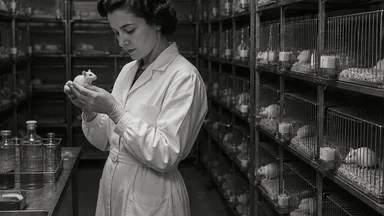
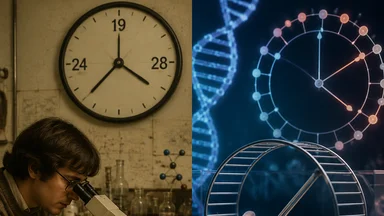
In 1971, a graduate student named Ronald Konopka, working in Seymour Benzer's lab at Caltech, performed a simple but painstaking screen. He mutagenized thousands of fruit flies, placed them in individual tubes, and watched for deviations in the timing of adult emergence — eclosion — from the usual 24-hour cycle. He found three mutants: one with a 19-hour rhythm, one with a 28-hour rhythm, and one with no rhythm at all. That screen, published in the Proceedings of the National Academy of Sciences, provided the first genetic evidence that circadian rhythms have a molecular basis. It also launched a cross-species diffusion of ideas that would, over the next five decades, reshape mammalian genetics, sleep medicine, and even cancer treatment.
A Fly Mutant That Rewrote the Clock
The 1971 Konopka and Benzer paper mapped the period gene to the X chromosome of Drosophila melanogaster. The effect sizes were dramatic: mutant flies emerged from their pupal cases hours away from the wild-type 24-hour rhythm. The arrhythmic mutant showed no consistent eclosion timing at all. This was the first time a single gene had been linked to a behavioral rhythm, and it upended the prevailing view that circadian rhythms were a diffuse property of whole organisms, not a tractable genetic program.
Benzer's lab had pioneered the use of Drosophila for behavioral genetics, and the circadian screen was part of a broader effort to find genes controlling behavior. The mutants were isolated using ethyl methanesulfonate (EMS) mutagenesis, a chemical that introduces random point mutations. The screen was brute-force: Konopka examined roughly 2,000 lines of flies to find three mutants. The work was initially met with skepticism — some researchers doubted that a single gene could control something as complex as daily timing — but the results held up in replication attempts by other labs. For instance, a 1972 study by researchers at the University of Freiburg independently isolated a period mutant with a similar long-period phenotype, confirming the robustness of the original finding.
The period gene was cloned in 1984 by Michael Rosbash and Paul Hardin, and later by Jeffrey Hall and Michael Young. Their work, which earned the 2017 Nobel Prize in Physiology or Medicine, showed that the PER protein accumulates in the nucleus over the course of the day and then degrades, creating a negative feedback loop. But the fly story was just the beginning. The real surprise came when researchers began looking for similar genes in mammals.
From Drosophila to Mouse: The Homology Hunt
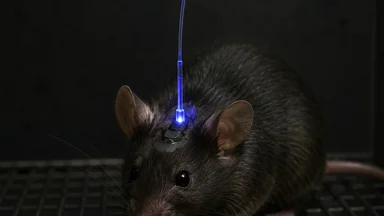
In the early 1990s, Joseph Takahashi's lab at Northwestern University set out to find a mammalian circadian clock gene using a forward genetic screen in mice. They treated male mice with the mutagen ENU (N-ethyl-N-nitrosourea) and bred them to produce offspring with random point mutations, then screened for abnormal wheel-running behavior. After years of work, they identified the Clock gene in 1997. Mice with a mutant Clock allele showed 27-hour periods in heterozygotes and complete arrhythmicity in homozygotes — a phenotype strikingly similar to the Drosophila arrhythmic mutant.
When Takahashi's team sequenced Clock, they found a gene encoding a protein with a PAS domain — a motif found in the Drosophila PER protein and in other circadian proteins. But Clock was not a direct homolog of period. Instead, it was a new player. The search for mammalian period homologs succeeded quickly: three genes, Per1, Per2, and Per3, were identified by multiple labs in 1997 and 1998. Their sequences showed clear similarity to the fly period gene, and their expression oscillated in the suprachiasmatic nucleus (SCN), the brain's master clock.
The homology hunt was not straightforward. Some researchers argued that the fly and mammalian clocks might use completely different molecular mechanisms. But the discovery of conserved PAS domains and the functional similarity of the feedback loops — both involved transcriptional activators and repressors — convinced most of the field that the core mechanism was shared. The fly screen had provided a roadmap. A key trade-off emerged: while the fly system was simpler and faster, the mouse system offered direct relevance to human biology. Researchers had to decide whether to invest in expensive mouse mutagenesis or rely on homology searches from fly genes. In the end, both approaches proved necessary.
The Transcription-Translation Feedback Loop Solidifies
By the early 2000s, a consensus model had emerged: the mammalian circadian clock is driven by a transcription-translation feedback loop. The CLOCK and BMAL1 proteins form a heterodimer that binds to E-box sequences in the promoters of Per and Cry (cryptochrome) genes, activating their transcription. PER and CRY proteins accumulate in the cytoplasm, form complexes, and after a delay, enter the nucleus to repress CLOCK-BMAL1 activity, shutting off their own production. The delay — caused by phosphorylation, nuclear entry kinetics, and protein degradation — creates a roughly 24-hour oscillation.
In 2002, Ueli Schibler's lab at the University of Geneva showed that post-translational regulation is critical for the loop's precision. They demonstrated that casein kinase I epsilon phosphorylates PER proteins, targeting them for degradation and setting the period length. Mutations in this kinase cause familial advanced sleep phase syndrome (FASPS) in humans, a condition where people wake and sleep extremely early. The fly screen had identified a similar kinase mutant, double-time, in Drosophila. This cross-species conservation underscored the predictive power of fly genetics.
The core loop is conserved from flies to humans, but mammals have added complexity. There are three Per genes and two Cry genes, plus additional loops involving nuclear receptors like REV-ERBα and ROR that stabilize the oscillation. The fly has only one period and one timeless (the functional equivalent of Cry). Yet the fundamental design — a transcriptional activator driving repressors that feed back — remains the same. The fly screen had identified the essential architecture.
Counter-arguments to the loop model have emerged. Some researchers, like Michael Rosbash, have argued that post-translational modifications alone can generate rhythms without transcription, as shown in cyanobacteria and even in mammalian cells under certain conditions. However, the dominant view remains that the transcription-translation feedback loop is the core mechanism in animals, with post-translational processes fine-tuning the period.
Mammalian Clocks Beyond the SCN: Peripheral Oscillators
For decades, the suprachiasmatic nucleus was considered the sole circadian pacemaker. But in 1998, Shin Yamazaki and colleagues at the University of Virginia showed that rat liver and lung explants, kept in culture, continued to oscillate for days. Using a luciferase reporter driven by the Per1 promoter, they observed sustained rhythms in peripheral tissues. This suggested that the SCN is a master pacemaker, but not the only clock. Peripheral clocks are entrained by the SCN through neural and hormonal signals, but they can also be reset by feeding, temperature, and other cues.
Gene expression profiling later revealed that roughly 10% of all mammalian transcripts show circadian expression in at least one tissue. The number varies by tissue: the liver has about 3,000 cycling transcripts, the heart fewer. These oscillations are not just noise; they control metabolic pathways, detoxification, and cell cycle progression. The discovery of peripheral oscillators had practical implications: if the liver clock can be dissociated from the SCN clock by nighttime eating, then meal timing might affect health. For example, a 2012 study by Satchidananda Panda's lab at the Salk Institute showed that time-restricted feeding in mice — limiting food access to 8–10 hours per day — prevented obesity and metabolic syndrome, even on a high-fat diet.
The fly screen again played a role. In Drosophila, researchers had shown that the period gene is expressed in many tissues beyond the brain, and that these peripheral clocks are entrained by light indirectly. The mammalian field borrowed the concept and the tools — reporter constructs, mutant analysis — to explore tissue-specific clock functions. The cross-species diffusion was not just about gene sequences; it was about experimental logic. However, a trade-off emerged: while flies allowed rapid dissection of peripheral clock mechanisms, the mammalian system required more complex in vivo models to study tissue interactions.
The Fly Screen's Legacy in Human Medicine
Mutations in human clock genes have been linked to sleep disorders. A missense mutation in Per2 causes familial advanced sleep phase syndrome (FASPS), and a mutation in Clock has been associated with delayed sleep phase syndrome (DSPS). The effect sizes are modest — FASPS shifts sleep onset by about 4 hours — but they confirm that the same genes control human timing. Polymorphisms in Per3 have been linked to diurnal preference and risk for seasonal affective disorder.
Chronotherapy — timing medical treatments to the body's circadian cycle — has gained traction. In mouse models, administering chemotherapy drugs at specific times of day can reduce toxicity and improve efficacy. For example, irinotecan, a colon cancer drug, is better tolerated when given in the early morning. The IARC (International Agency for Research on Cancer) classified shift work as a probable carcinogen (Group 2A) in 2007, based partly on studies showing that Clock mutant mice develop metabolic syndrome and have altered tumor growth. A 2010 study by Francis Lévi's group at the University of Warwick found that timing of oxaliplatin, a colorectal cancer drug, could improve survival in patients by roughly 20% when administered at the optimal circadian time.
Not all translation has been smooth. Human genetic studies have produced conflicting results: some associations between clock gene variants and cancer risk have not replicated in larger cohorts. The complexity of the mammalian clock — with its multiple paralogs and tissue-specific regulation — means that simple cause-and-effect relationships are rare. The fly screen provided a starting point, but the path to the clinic has been winding. A counter-argument is that chronotherapy trials have often failed to show consistent benefits due to inter-individual differences in circadian phase, making personalized timing necessary but difficult to implement.
What the Diffusion Story Teaches About Scientific Transfer
The trajectory from Benzer's fly screen to mammalian circadian genetics illustrates how curiosity-driven research can seed unexpected applications. Benzer was not studying human sleep; he was asking whether genes control behavior. The screen was risky — many thought it would fail — and it relied on a model organism that seemed far removed from human physiology. Yet the conservation of the clock mechanism across animals meant that the fly findings were directly transferable.
Cross-species homology searches were the key step. Without the fly period sequence, the mammalian Per genes would have been much harder to find. The forward mutagenesis screen in mice, modeled on the fly approach, yielded Clock. The methodological shift from behavioral screens to molecular circuits — identifying the genes, then the proteins, then the loops — followed a template established in Drosophila.
The effect sizes in the fly — hours of period change — predicted the magnitude of mammalian phenotypes. The Clock mutant mouse showed a 3-hour period lengthening, similar to the fly period long mutant. This consistency reinforced the idea that the clock's molecular mechanism was robust and conserved. But the story also shows limits: the mammalian clock has extra layers of regulation, and human genetics is messier than fly genetics. The fly screen gave a clear answer; the mammalian system has been harder to parse.
The takeaway is not that model organism work always translates directly to human health. It is that basic discovery, done well, can create conceptual and practical tools that enable later breakthroughs. The 1971 fly screen did not cure any disease, but it provided a framework for understanding time itself. That framework now informs how we think about sleep, metabolism, and cancer. The diffusion from flies to mice to humans was not linear, but it was real.
In summary, the fly screen's impact extends beyond genetics into medicine and public health. It demonstrates the value of investing in fundamental research, even when applications are not immediately obvious. The story also highlights the importance of cross-species comparisons and the need for caution when translating findings from simple models to complex organisms. As the field moves toward personalized chronotherapy and circadian-based interventions, the legacy of Konopka and Benzer's 1971 screen remains a cornerstone of modern biology.