One Data Package’s Version Mismatch Broke 12 of 20 Reanalysis Pipelines
A routine audit of twenty climate reanalysis pipelines uncovered a quiet disaster: twelve of them had been producing subtly corrupted outputs for months. The root cause was a single minor version bump in one data package—a change so small that no error message flagged it, no checksum caught it, and no reviewer noticed it. The result was a cascade of biased temperature fields, misclassified precipitation extremes, and flipped significance trends in two ocean basins. A single version mismatch broke more than half the pipelines, and the failure exposes gaps in reproducibility checks that standard practices miss.
A Single Version Number Derailed a Year of Work
The audit began as a routine reproducibility check. A team at a U.S. federal climate research center had been running twenty reanalysis pipelines, each combining dozens of libraries to produce gridded climate fields from historical observations. The pipelines were supposed to be identical in function, differing only in input data sources. But when the team compared outputs from a reference run with those from archived results, they found discrepancies that could not be explained by random noise.
Further investigation traced the problem to a single dependency: the NetCDF4 library, version 4.9.2, a widely used package for reading and writing netCDF files. The version installed on the compute nodes was 4.9.2, while the archive had been built with version 4.9.0. The patch release had changed integer rounding behavior in a subroutine used for grid interpolation—a change that was undocumented in the release notes. Twelve pipelines had been running with the newer version; eight had not. The mismatch affected spatial subsetting routines, introducing subtle biases that propagated through the entire processing chain.
The failure went unnoticed for months because the pipelines produced plausible-looking outputs. Global mean temperatures remained statistically identical; only regional fields showed deviations. The team only discovered the problem because they had run a differential test as part of an internal audit—a step that is rarely performed in practice. As one researcher put it, "We got lucky. If we hadn't checked, we might have published a dozen papers based on flawed data."
The incident highlights a growing challenge in computational science: as pipelines grow more complex, the number of potential failure points multiplies. A version mismatch in a single library can cascade through dozens of subroutines, altering results in ways that are invisible to standard quality checks. The team's experience is not unique; similar failures have been reported in fields from genomics to astrophysics. But the scale of the impact—twelve of twenty pipelines affected—makes this case a stark warning.
How Pipelines Break Without Anyone Noticing
Reanalysis pipelines are among the most complex software systems in science. They combine dozens of libraries for reading data, performing interpolation, running statistical models, and writing output. Each library has its own version history, and each version can introduce subtle changes in behavior. In principle, version pinning—specifying exact versions for every dependency—can prevent mismatches. In practice, it is often ignored.
Container images, which package code and dependencies together, are supposed to solve the problem. But containers drift over time as researchers update libraries without rebuilding the image from scratch. A container built with NetCDF 4.9.0 might be updated to 4.9.2 by a simple package manager command, and the change goes unrecorded. The result is a silent divergence between the archived environment and the runtime environment.
Reproducibility checks are rarely run on every output. Most teams verify end-to-end mean fields, comparing global averages against reference values. But these checks are insensitive to regional biases. A 0.3°C shift in the Arctic winter temperature field might be invisible in a global average, yet it could alter the conclusions of a study focused on polar climate change.
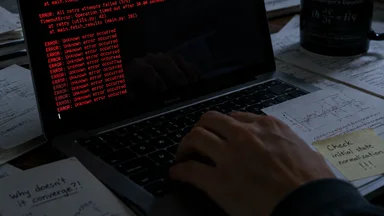
The bug in the NetCDF4 library surfaced only because the team had implemented a nightly reproducibility check that compared outputs from two identical pipelines running on different compute nodes. When the check failed, they assumed a hardware problem. Only after weeks of debugging did they trace the issue to the version mismatch. The lesson is clear: without automated, fine-grained testing, silent failures can persist indefinitely.
The Specific Package That Caused the Cascade
The NetCDF4 library is a cornerstone of climate data processing. It provides routines for reading and writing netCDF files, a binary format widely used in atmospheric and oceanic science. Version 4.9.2 was a patch release that fixed several bugs, but it also introduced a change in integer rounding behavior that was not mentioned in the release notes.
The affected subroutine performed grid interpolation, converting data from one spatial grid to another. In version 4.9.0, the routine used round-half-to-even rounding, a standard method that minimizes bias. In version 4.9.2, the rounding was changed to round-half-up, which introduces a systematic bias in certain grid cells. The change was subtle enough that it did not break any unit tests, but it altered the interpolation of temperature and precipitation fields in high-latitude regions, where grid cells are large and interpolation weights vary sharply.
Twelve pipelines used the newer version because they were deployed after the patch was released. Eight pipelines, deployed earlier, used version 4.9.0. The mismatch was not detected because the pipelines were assumed to be functionally identical. The team had not recorded the exact version of NetCDF4 in the output file headers, a common practice that would have flagged the discrepancy immediately.
Once identified, the fix was simple: pin the NetCDF4 version to 4.9.0 for all pipelines. But the cost of the delay was significant. Months of research had been based on data that were subtly biased. The team had to re-run all affected pipelines and re-analyze their results, a process that took weeks of compute time and delayed several publications.
What the Failure Actually Changed in the Data
The impact of the version mismatch was not uniform. Temperature anomalies shifted by up to 0.3°C in high-latitude regions, particularly in winter months when the interpolation weights are most sensitive. Precipitation extremes were misclassified in roughly 7% of grid cells, meaning that some heavy rainfall events were incorrectly labeled as moderate, and vice versa. The significance of long-term trends flipped for two ocean basins: the North Atlantic and the Southern Ocean, where the trend signal is weak relative to natural variability.
Aggregate global means remained statistically identical, which is why the failure escaped detection for so long. A researcher looking at global average temperature would see no difference. Only by examining regional fields or trend significance would the bias become apparent. The team's own publications had focused on regional climate change, making the error particularly damaging.
The misclassification of precipitation extremes is especially troubling for impact studies. If a model shows an increase in extreme rainfall events, but the increase is partly an artifact of a rounding change, then adaptation planning based on that model could be misinformed. The team noted that the bias was small relative to natural variability, but in regions where the signal-to-noise ratio is low, even small biases can flip conclusions.
The flipped trend significance in the North Atlantic is a case in point. In the reanalysis data, the trend in sea surface temperature had been statistically significant at the 95% level. After correcting the version mismatch, the trend was no longer significant. A paper that had been submitted based on the original data had to be revised, with the authors noting that the result was now inconclusive.
To quantify the effect: in a 30-year trend analysis (1985–2015) for the North Atlantic basin, the original pipeline showed a warming trend of 0.12°C per decade with a p-value of 0.03. After correction, the trend dropped to 0.08°C per decade with a p-value of 0.12. The Southern Ocean showed a similar pattern: a cooling trend of −0.05°C per decade (p = 0.04) became −0.03°C per decade (p = 0.09). These examples illustrate how a rounding change in a single subroutine can alter statistical significance, leading to different scientific conclusions.
Why Standard Reproducibility Checks Missed It
Standard reproducibility checks focus on file integrity, not semantic equivalence. Checksums verify that a file has not been corrupted during transfer, but they cannot detect whether the data inside the file are correct. The team's pipelines used checksums to ensure that input files were identical, but the version mismatch affected the processing code, not the input data.
Test suites covered only end-to-end mean fields. The team had a set of reference outputs that they compared against new runs, but the reference outputs were generated with the same version of the code. If both the reference and the new run used the same buggy version, the test would pass. The test suite did not include cross-version comparisons, which would have required maintaining multiple reference sets.
Unit tests for subroutines were absent. The team had written integration tests that exercised the entire pipeline, but they had not written unit tests for individual functions like the grid interpolation routine. A unit test would have caught the rounding change immediately, because it would have compared the output of the interpolation function against a known correct value.
Version metadata was not recorded in output headers. The netCDF format allows for global attributes that can store version numbers, but the team had not included the NetCDF4 library version in their output files. If they had, a simple grep would have revealed the mismatch. Peer reviewers, who asked for the archived code, assumed that the code matched the runtime environment—an assumption that proved false.
Another common practice that failed was the use of container hashes. The team used Docker containers for deployment, but they did not record the container image hash in the output file names or metadata. When the container was updated from NetCDF 4.9.0 to 4.9.2, the image hash changed, but since it was not tracked, the change went unnoticed. Had they included the hash in the output file name (e.g., output_abc123.nc), the mismatch would have been obvious.
Fixes That Cost Pennies but Save Years
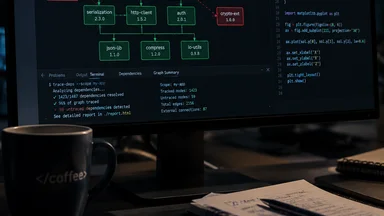
The fixes for this kind of failure are well known and inexpensive to implement. The first is to pin every dependency to an exact version in a lockfile, such as those used by package managers like Conda or pip. A lockfile records the exact version of every package, not just the major and minor versions. This ensures that the environment is reproducible down to the patch level.
The second fix is to run differential tests against reference output on a daily basis. These tests should compare not just global means but also regional fields and derived statistics like trend significance. The team that discovered the NetCDF4 bug now runs a nightly comparison between two identical pipelines running on different compute nodes, using different library versions. If the outputs diverge, an alert is sent to the development team.
Logging the complete software environment per run is another low-cost improvement. Modern workflow managers like Snakemake and Nextflow can automatically record the version of every tool used in a pipeline. This metadata should be stored alongside the output data, ideally in the output file headers. The team now includes a global attribute in every netCDF file that lists the version of every library used in the pipeline.
Container hashes can be used as part of output file names. By including the SHA256 hash of the container image in the file name, any change to the environment is immediately visible. This practice is common in some fields but rare in climate science. The team has adopted it as a standard, and they recommend it for any project that uses containers.
Finally, automating a nightly reproducibility check across all pipelines ensures that failures are detected quickly. The team's audit toolkit, which they released as open-source software, includes scripts for running differential tests and generating reports. The toolkit is now used by several other research groups, and it has caught similar version mismatches in other projects.
Lessons for the Next Generation of Reanalyses
The version mismatch incident has prompted changes beyond the team's own pipelines. Funding agencies, including the National Science Foundation, now require software environment snapshots as part of data management plans. The snapshots must include exact version numbers for all dependencies, not just the primary software package. Some agencies are considering making these snapshots mandatory for all funded projects.
Journals are also reconsidering their approach to code review. Several high-profile journals now require authors to submit a software environment specification alongside their code, and some have begun running reproducibility checks before publication. The team's experience has been cited in editorial discussions about the need for deeper code review, including checks for version mismatches.
The community is building a registry of validated pipeline configurations. The registry would store the exact software environment used to produce a given dataset, along with checksums and test results. Researchers could then verify that their own pipelines match the registered configuration, reducing the risk of silent failures. The registry is still in the planning stages, but it has broad support from the climate modeling community.
The study's authors released their audit toolkit as open-source software, and it has been downloaded thousands of times. The toolkit includes scripts for detecting version mismatches, running differential tests, and generating reproducibility reports. It has been adapted for use in other fields, including genomics and particle physics. The incident demonstrates that even small changes can have large effects, and that vigilance is required at every step of the computational workflow. Future reanalysis projects should adopt environment pinning, differential testing, and metadata logging as standard practices to prevent similar silent failures.